

Choosing LED Bulbs: Look at Lumens and Color Temperature, Not Just Watts
Choosing LED bulbs gets much easier once you know which numbers to read. LED bulbs use much less electricity than incandescent bulbs, and less than compact fluorescents for the same brightness. Swapping bulbs is the easiest energy saving at home: no habits to change, just screw in a new bulb.
The hard part is choosing. We used to buy bulbs by watts: 60W, 100W. With LEDs, watts only tell you how much power the bulb uses, not how bright it is.
Table of Contents
Lumens: actual brightness
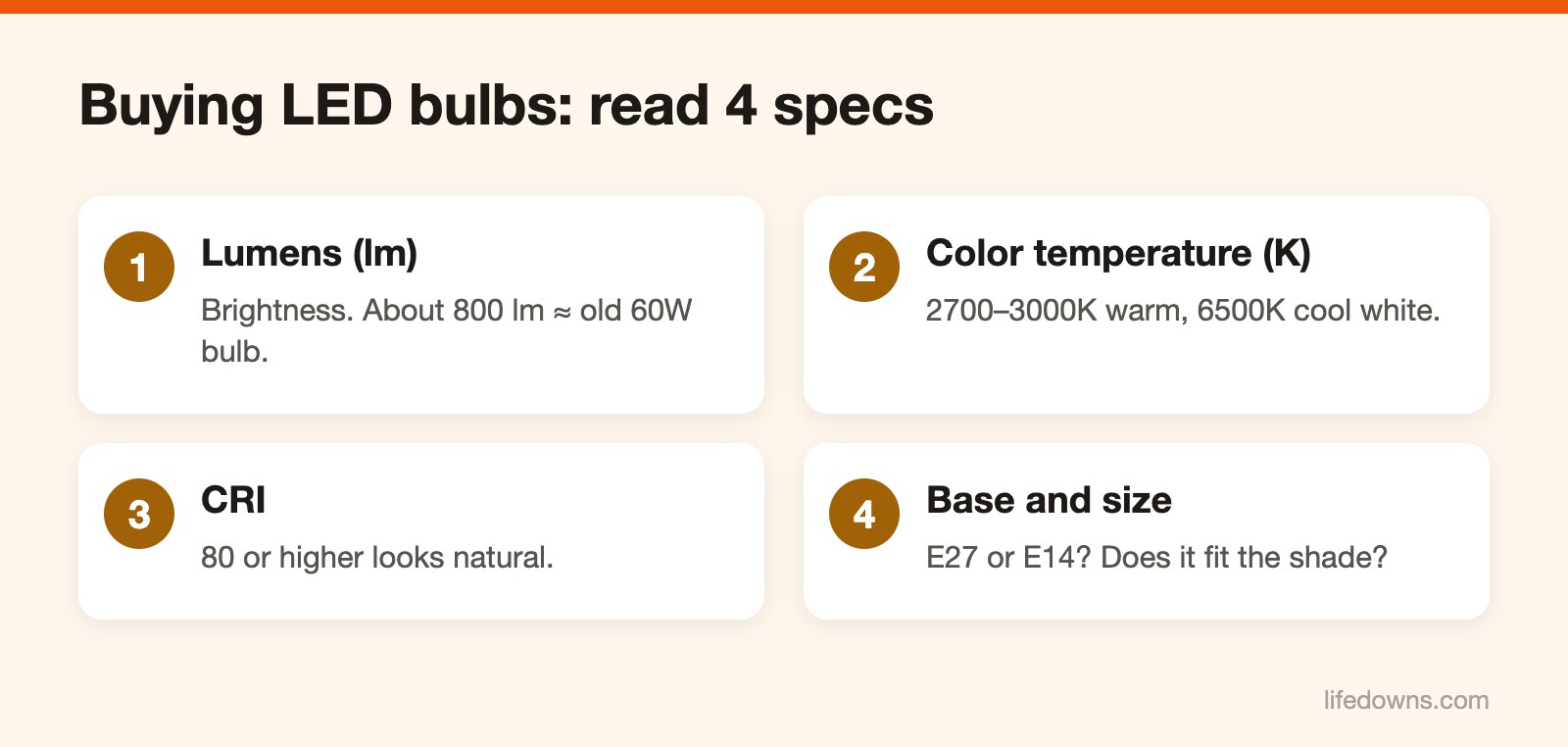
Brightness is measured in lumens (lm), printed on the box. As a reference, about 800 lm is roughly equal to an old 60W incandescent bulb. Around 1,500 to 1,600 lm is roughly a 100W bulb.
Two 9W LED bulbs can differ in brightness because efficiency varies by brand. Compare lumens, not watts. Choosing LED bulbs by color temperature sets the mood of the room.
Color temperature: warm or cool
Measured in Kelvin (K).
- 2700–3000K: warm yellow light, good for bedrooms and living rooms in the evening.
- Around 4000K: neutral white, good for kitchens and desks.
- 5000–6500K: bluish white, bright and crisp, suited to workshops and garages. It can feel cold in a bedroom.
CRI: do colors look real
The color rendering index (CRI) tells you whether objects keep their true color under the light. A CRI of 80 or higher works well at home. For kitchens and makeup mirrors, go higher, around 90, so food and skin tones look right. Choosing LED bulbs by lumens tells you how bright the room will be.
Base and size
Check the old bulb’s base before you shop: E27 is the common large screw base, E14 is the small screw base often used in bedside lamps and chandeliers. LED bulbs are sometimes longer than old ones, so check that the shade still fits. Get choosing LED bulbs right once and they last for years.
A few buying notes
- If the light is on a dimmer switch, buy LEDs clearly labeled as dimmable, or they will flicker.
- Buy from a store that offers a warranty. Cheap bulbs of unknown origin often fail early, and some flicker enough to strain your eyes.
- Replace the bulbs that are on the most hours first: living room, kitchen, hallway. A storeroom light used five minutes a week can wait.
Next time you shop, try choosing LED bulbs by lumens and color temperature. Learn more about color temperature, or read how to cut your electricity bill in the hot season.