
Washing Machine Energy Saving: 6 Easy Habits to Cut Your Bill
Washing machine energy saving does not have to start with buying a new appliance. With the same machine, the way you load it and the temperature and programme you choose can make a clear difference to the power and water you use each month.
This guide suggests 6 habits you can apply from your next wash, plus a few pointers for choosing a new machine.
Contents: Washing machine energy saving
1. Where a washing machine uses energy
A wash cycle uses electricity for three main jobs: turning the drum, pumping water and heating water. Of these, heating water takes the most energy whenever you choose a warm or hot programme. That makes wash temperature the most important setting if you want a lower bill.
For more on how the different machine types work, see the Washing machine article on Wikipedia.
2. 6 habits for washing machine energy saving
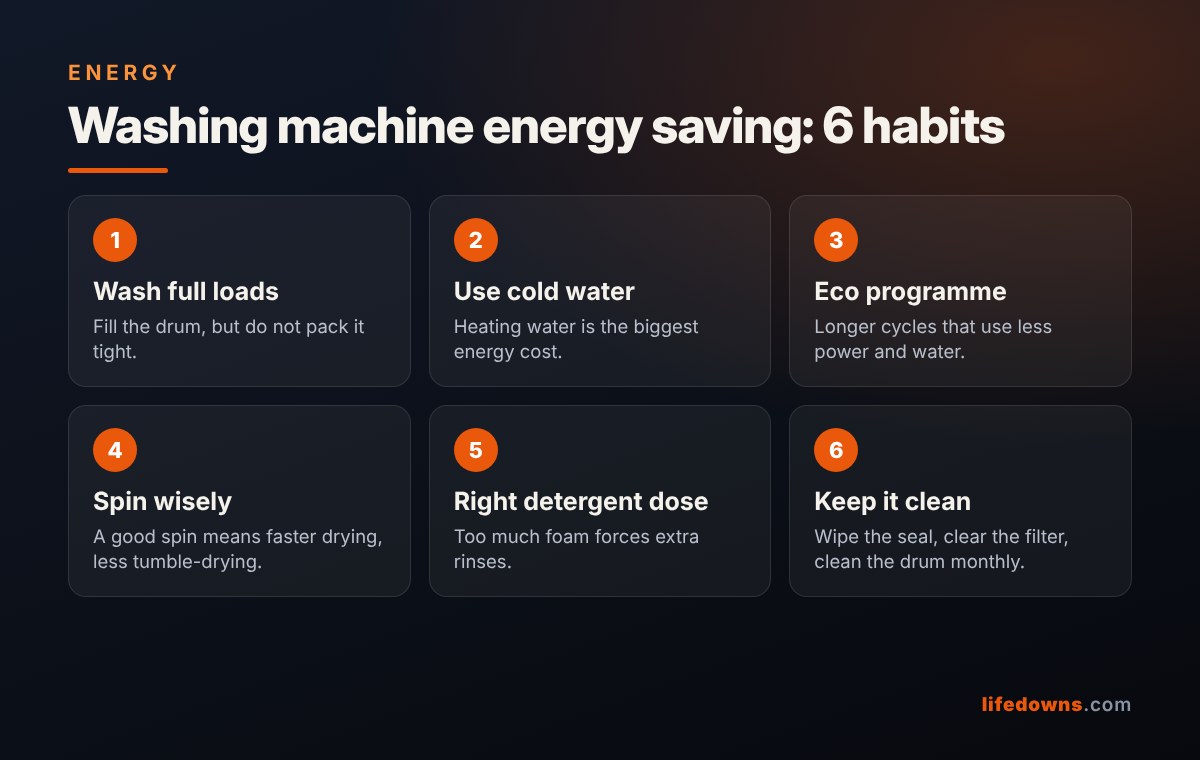
Habit 1: Wash full loads
Half a load does not use half the power and water. Collect enough laundry to nearly fill the drum, leaving about a hand’s width of space at the top so clothes can still tumble. Packing it tight leaves clothes dirty and wears the machine out.
Habit 2: Use cold water when you can
For everyday clothes that are not heavily soiled, cold water or 30°C with a modern detergent is usually enough. Keep hot washes for towels, bedding, laundry from someone who is ill or greasy stains.
Habit 3: Choose the Eco programme
Eco programmes usually run longer, but use less water and heat it to a lower temperature, so total energy falls. A longer cycle does not mean more electricity. Quick washes at high temperatures can use more power than you expect.
Habit 4: Spin wisely
A high spin speed removes more water, so clothes dry faster on the line and need far less time in a tumble dryer. For thin, crease-prone fabrics, lower the spin speed to protect them.
Habit 5: Use the right amount of detergent
More detergent does not mean cleaner clothes. Excess foam forces extra rinses, using more water and power and leaving residue in the drum. Measure according to the pack, the load size and how dirty it is.
Habit 6: Clean the machine regularly
Wipe the door seal, clean the detergent drawer and lint filter, and run a drum-clean cycle about once a month. A clean machine drains freely, washes better and smells fresher.
💡 Quick tip: If your electricity is billed in rising tiers, cutting the number of washes by running full loads helps more than choosing a time of day.
3. Line drying or tumble drying
A tumble dryer typically uses far more electricity than the washing machine for the same load. When the weather allows, line drying is the cheapest option. If you must use a dryer, spin well first, clean the lint filter after every cycle and avoid over-drying.
4. What to look for in a new washing machine
| Feature | What to check |
|---|---|
| Energy label | Higher ratings use less; compare the consumption figure on the label |
| Capacity | Match it to your household so you usually run full loads |
| Inverter motor | Quieter and adjusts power to the load |
| Load sensor | Adjusts water to the weight of laundry |
5. Summary: start with your next wash
For washing machine energy saving, try three things today: fill the drum, lower the temperature and press Eco. After a month or two, compare your bills to see the difference.
More from our Energy section: Air Conditioner Energy Saving: The Best Temperature and 6 Easy Habits to Cut Your Bill and Standby Power: 6 Simple Ways to Cut “Phantom” Electricity from Devices You Aren’t Using.
Frequently asked questions about washing machine energy saving
Does cold water clean clothes properly
For everyday clothes with a modern detergent, usually yes. Heavily soiled items, towels and bedding may need a warmer wash.
Does a long Eco cycle use more electricity
No. Eco runs longer but at a lower temperature with less water, so total energy is usually lower than a standard programme.
Is a front loader or a top loader more efficient
Front loaders generally use less water and spin drier, but cost more to buy. Compare the energy labels of specific models.
How often should I clean the drum
About once a month, or as the manufacturer advises, and wipe the door seal dry after each wash.
How many loads does your household wash each week? Share your saving tips in the comments! 🧺⚡