
Daily Walking for 30 Minutes: The Benefits and 7 Simple Tips to Keep the Habit When You Are Busy
Daily walking is the simplest form of exercise almost anyone can do: no gym, no equipment, just a pair of shoes and about 30 minutes. For people who sit at a desk all day, it is also the easiest way to start moving again after a long inactive stretch.
This guide sums up the benefits of walking, how much activity is recommended and 7 simple tips to keep a daily walking habit going even with a busy schedule.
Contents: daily walking
1. The benefits of daily walking
Walking is moderate-intensity physical activity that suits many ages. Regular movement supports heart health, helps manage weight and improves sleep and mood. According to the World Health Organization (WHO), regular physical activity provides significant benefits for hearts, bodies and minds.
- Heart and lungs: they get a gentle workout every day.
- Bones, joints and muscles: legs, hips and back stay mobile.
- Mood: many people feel clearer-headed after a walk.
- Sleep: being active during the day often makes it easier to fall asleep.
2. How much walking is enough?
WHO recommends adults do at least 150–300 minutes of moderate-intensity activity a week. Spread out, that is about 30 minutes a day on 5 days. Brisk walking is one of the easiest ways to get there.
What counts as “moderate intensity”?
A simple self-check: you breathe faster than usual and can still talk in full sentences, but you could not sing. If singing is easy, pick up the pace a little.
💡 Note: If you have heart or joint problems, are pregnant or have been inactive for a long time, ask your doctor before increasing your time and intensity.
Do you need 10,000 steps?
Ten thousand steps is memorable but not mandatory. If you currently walk about 3,000 steps, adding a few thousand a day is already real progress. Compare yourself with last week’s you.
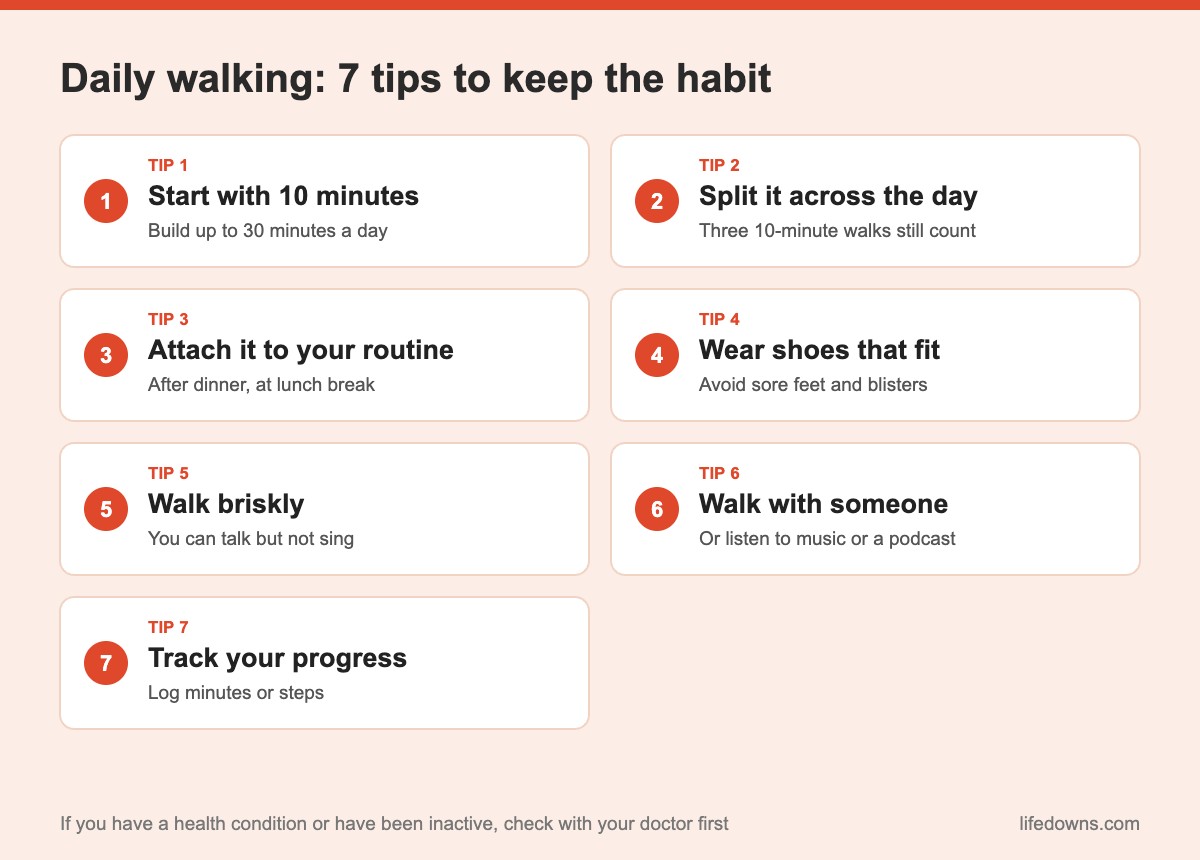
3. 7 tips to keep a daily walking habit
Tip 1: Start with 10 minutes
Do not aim for 30 minutes on day one if you have not exercised in a while. Start with 10 minutes and add 5 each week. A small, steady habit lasts far longer than a big burst of motivation.
Tip 2: Split it across the day
No 30-minute block? Split it into three 10-minute walks: morning, after lunch and evening. It is the total for the day that matters.
Tip 3: Attach it to your existing routine
Walk after dinner, walk during phone calls, get off the bus one stop early, take the stairs instead of the lift. When it rides on something you already do, you do not need to find time.
Tip 4: Wear shoes that fit
A pair of well-fitting, cushioned trainers helps you avoid sore feet and blisters. Breathable clothes and a hat on sunny days are all you need.
Tip 5: Walk briskly with good posture
Keep your back straight, eyes forward, shoulders relaxed and arms swinging naturally. Take comfortable strides, landing on your heel and rolling to your toes. Go slowly for the first few minutes and ease off for the last few.
Tip 6: Walk with someone, or listen to something
A walking partner makes it harder to skip. If you walk alone, a favorite playlist or podcast makes 30 minutes fly by. Near traffic, keep the volume low so you can still hear what is around you.
💡 Quick tip: Set a fixed time with your walking partner, such as 7:30 every evening. Promises to other people are usually easier to keep than promises to yourself.
Tip 7: Track your progress
Use your phone’s health app, a smartwatch or simply mark each walking day on a calendar. Seeing an unbroken streak is great motivation not to quit.
4. Walking safely: things to remember
- Choose safe places: parks, wide pavements, well-lit streets.
- Avoid harsh sun: walk early or late, wear a hat and sunscreen.
- Stay hydrated: carry water, especially on hot days.
- Wear bright clothes at night: so drivers can see you.
- Stop if it hurts: chest pain, dizziness or unusual breathlessness means rest and see a doctor.
5. The bottom line: daily walking is a small investment in your health
Daily walking takes little time and no money. Start with 10 minutes, build up to 30, attach it to your routine and bring someone along, and you will have an exercise habit that lasts for years.
A 4-week walking plan for beginners
| Week | Time per day | Days per week | Notes |
|---|---|---|---|
| Week 1 | 10 minutes | 5 days | Easy pace, get used to it |
| Week 2 | 15 minutes | 5 days | Slightly faster |
| Week 3 | 20–25 minutes | 5 days | Can be split in two |
| Week 4 | 30 minutes | 5 days | About 150 minutes a week |
Note: This plan is a guide for healthy adults and does not replace advice from your doctor.
A few final tips
- Leave your shoes by the door: One less excuse to put it off.
- Change your route: Try a new path now and then to keep it interesting.
- Rainy days: Walk indoors, in a corridor or at a shopping mall.
- Add strength work: WHO also recommends muscle-strengthening activity at least 2 days a week.
More from our Health section: Drinking enough water: how much you really need and Sitting all day? Stand up every 30 minutes.
FAQ about daily walking
How many minutes of daily walking is enough?
The World Health Organization recommends adults get at least 150–300 minutes of moderate-intensity activity a week. Brisk walking for about 30 minutes a day, 5 days a week, is a simple way to reach the minimum.
Do I need 10,000 steps a day?
No. 10,000 steps is an easy number to remember, not a medical threshold. What matters is moving regularly and gradually doing more than you do now.
What is the best time of day to walk?
The best time is the one you can stick to. Early morning and evening are usually cooler and more comfortable; avoid harsh midday sun.
Does walking help with weight loss?
Walking burns energy and supports weight management when combined with sensible eating. Results vary from person to person and take time.
How many minutes have you walked today? Leave a comment and share your favorite route or the trick that keeps you going! Save this post and invite someone to start daily walking with you. 🚶♀️🌿