
Proper Handwashing: 6 Easy Steps in 20 Seconds and 5 Key Moments
Proper handwashing is one of the simplest and cheapest habits for lowering the risk of illnesses that spread by hand, such as diarrhoea, colds, flu and pink eye. What matters is not only whether you wash, but whether you wash long enough and reach every part of the hand.
This guide covers 6 steps for washing your hands, 5 moments in the day when it matters most and the mistakes that make handwashing less effective.
Contents: Proper handwashing
1. Why proper handwashing matters
Hands touch door handles, phones, money and lift buttons, then touch the eyes, nose and mouth many times a day. Soap lifts dirt and microbes off the skin so water can carry them away. A quick splash for a few seconds leaves most of them behind between the fingers, on the thumbs and on the fingertips.
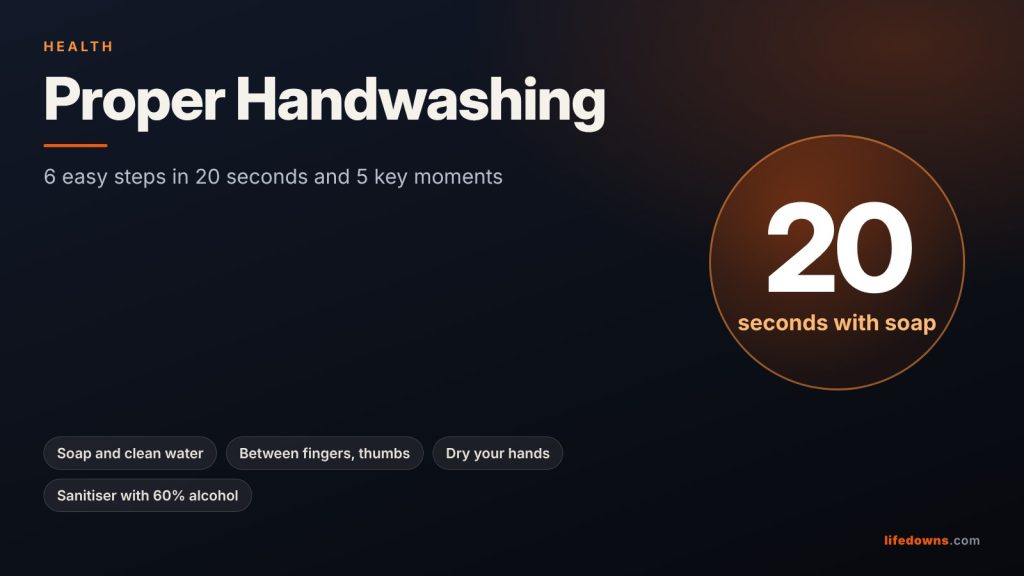
The US Centers for Disease Control and Prevention (CDC) recommends scrubbing with soap for at least 20 seconds. You can read the original guidance on the CDC Clean Hands page.
2. 6 steps for proper handwashing
First wet your hands under clean running water and apply soap. Then scrub using the six steps below, repeating each a few times:
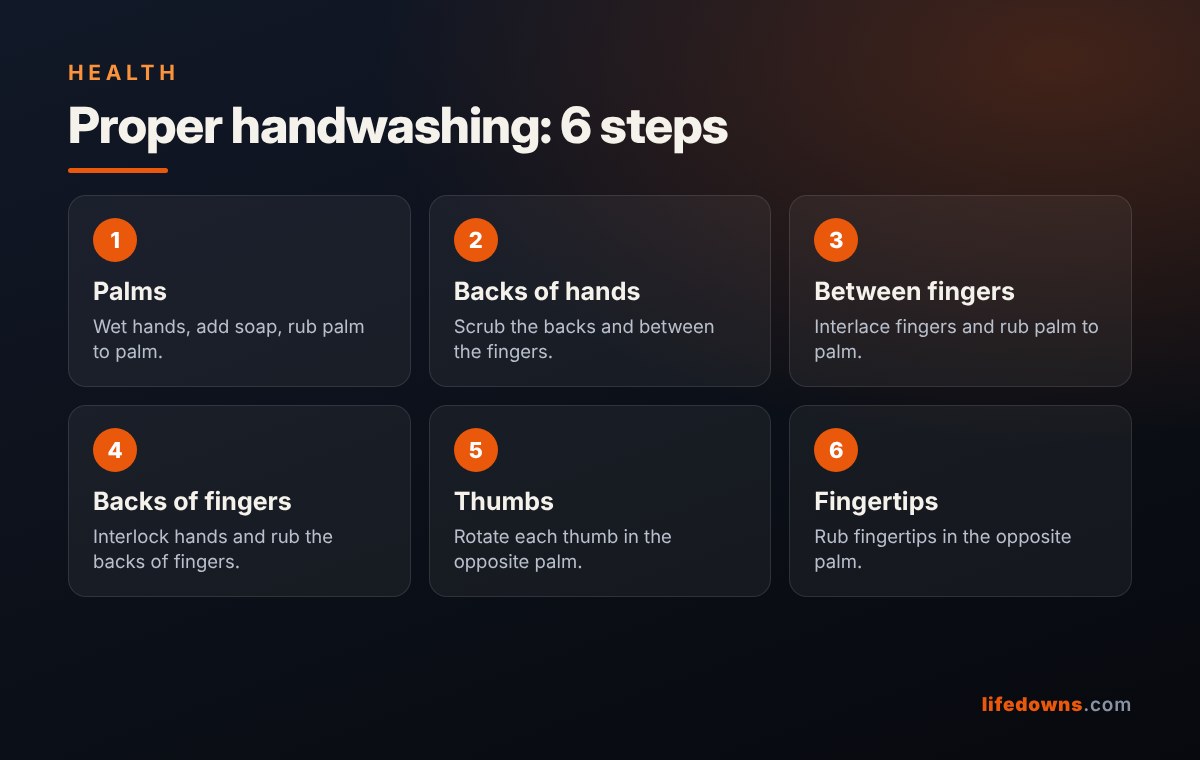
Step 1: Rub palm to palm
Rub your palms together until the soap lathers evenly.
Step 2: Scrub the backs of your hands
Place one palm over the back of the other hand, interlace the fingers and scrub. Swap hands.
Step 3: Clean between your fingers
Bring your palms together, interlace your fingers and rub between them.
Step 4: Scrub the backs of your fingers
Interlock your fingers and rub the backs of the fingers against the opposite palm.
Step 5: Wash your thumbs
Clasp one thumb in the opposite hand and rotate back and forth. Swap hands.
Step 6: Clean your fingertips
Bunch your fingertips together and rotate them in the opposite palm to clean the tips and nails. Swap hands.
Finally, rinse well under running water and dry with a clean towel or paper. Wet hands pick up germs more easily than dry ones.
💡 Timing tip: Twenty seconds is about the length of humming “Happy Birthday” twice.
3. 5 key moments to wash your hands
- Before, during and after preparing food; before eating.
- After using the toilet or changing a nappy.
- After coughing, sneezing or blowing your nose.
- After handling rubbish or touching animals and their waste.
- When you get home from shopping, public transport or touching shared surfaces.
4. Soap or hand sanitiser
| Criteria | Soap and water | Hand sanitiser |
|---|---|---|
| When to use | First choice, especially when hands are visibly dirty | When soap and water are not available |
| Requirement | Scrub for at least 20 seconds | At least 60% alcohol |
| How | Six steps, rinse well, dry | Rub over all surfaces until completely dry |
5. Common handwashing mistakes
- Washing too quickly: five to ten seconds is not enough.
- Missing thumbs and fingertips: the two most commonly missed areas.
- Skipping soap: water alone is far less effective.
- Not drying your hands: or drying them on clothes or a dirty towel.
- Relying on sanitiser when hands are greasy or soiled.
6. Summary: building a proper handwashing habit
You do not need to memorise every detail at once. Start with two things: wash for a full 20 seconds, and do not forget thumbs, between the fingers and fingertips. Keep soap at the kitchen and bathroom sinks so proper handwashing is always convenient. This article is general information, not medical advice.
More from our Health section: Desk Posture: 6 Easy Adjustments to Ease Neck and Shoulder Strain and Morning Stretching in 5 Minutes: 6 Easy Moves You Can Do Right in Bed.
Frequently asked questions about proper handwashing
How long should you wash your hands
Scrub with soap for at least 20 seconds before rinsing, as the CDC recommends.
Is warm water better than cold water
Not necessarily. Warm or cold water both work, as long as it is clean and you use soap. Time and technique matter more than temperature.
Can hand sanitiser replace soap
Use it only when soap and water are not available. Choose one with at least 60% alcohol and rub until your hands are dry.
Do I need antibacterial soap
For everyday use, plain soap is enough when you wash properly and for long enough.
Do you wash your hands as soon as you get home? Tell us in the comments! 🧼💧