
Long Motorbike Trip Checklist: 7 Essential Things to Prepare Before You Ride
A long motorbike trip gives you a kind of freedom few other ways of traveling can match: stop wherever you like, take in the scenery and set your own schedule. But a ride of a few hundred kilometers also asks a lot more than your daily commute, of both the bike and the rider.
Whether you are heading home for the holidays or planning a motorbike road trip with friends, this 7-point checklist helps you prepare: checking the bike, documents and protective gear, packing luggage and planning rest stops.
Contents: long motorbike trip checklist
1. Why a long motorbike trip needs careful preparation
On a long ride, the bike runs for hours at higher speeds than in the city, carries extra luggage and may face mountain passes and rough roads. A worn tire or thin brake pads might not show on your daily commute, but they become a big problem on a quiet road far from help.
The rider tires faster too: sun, wind, noise and sitting for hours all wear down concentration. Preparing well does not make the trip less fun; it lets you relax and enjoy it.
2. Prepare the bike: 3 checks before you go
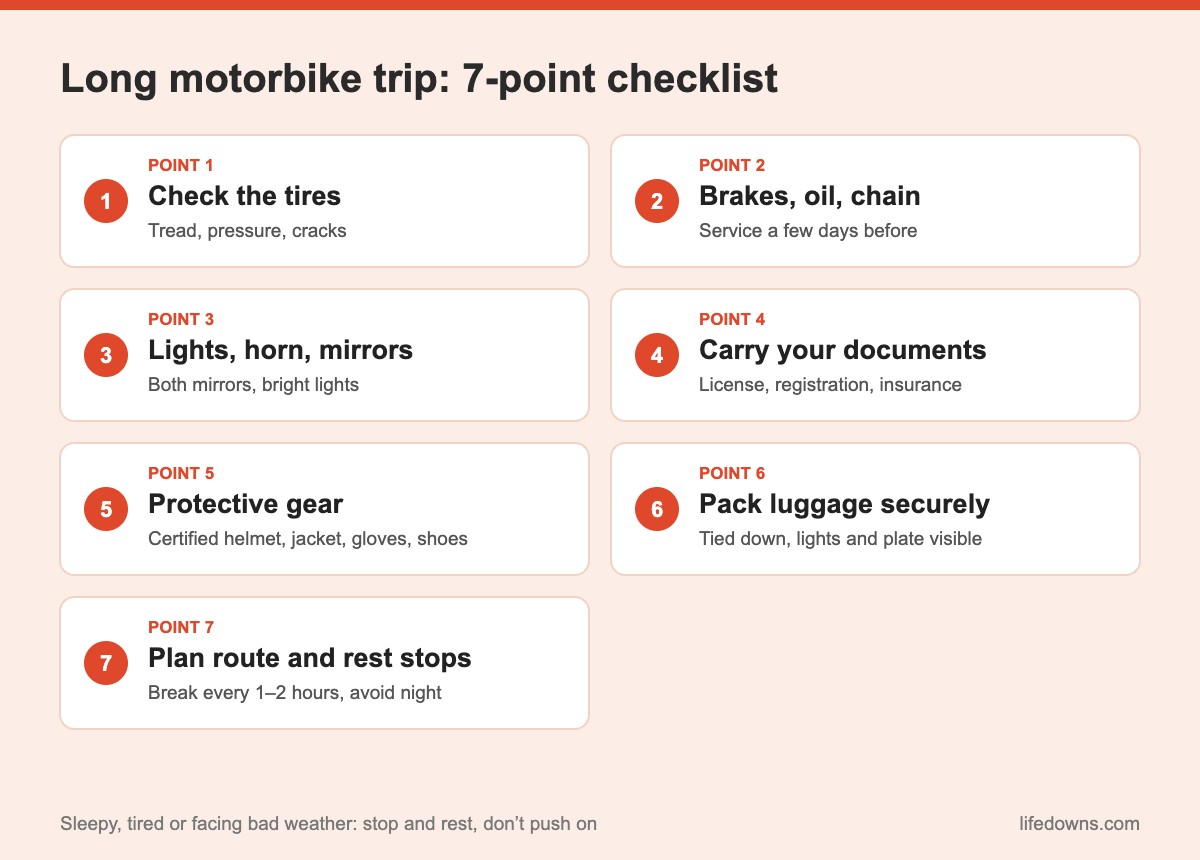
Point 1: Check the tires
Look at tread depth and check for cracks, bulges or sharp objects. Inflate to the pressure in your owner’s manual or on the sticker on the bike; with a heavy load, manufacturers often recommend slightly higher pressure.
Point 2: Check brakes, oil and chain
Brake pads should have plenty of material and both brakes should bite evenly. Engine oil should be at the right level and not overdue for a change. On bikes with a chain, it should be properly tensioned and lubricated. The easiest route is to have a mechanic service the bike a few days before you leave.
💡 Quick tip: Do not service the bike at the last minute. Do it a few days ahead and ride around town to catch anything unusual early.
Point 3: Check lights, horn and mirrors
Headlight, tail light, brake light and indicators should all be bright. The horn should be loud. Make sure you have both mirrors, adjusted correctly. These are what let you see and be seen on the road.
3. Prepare yourself and your documents
Point 4: Carry all your documents
- A driving license valid for your type of bike.
- Vehicle registration.
- Valid compulsory insurance.
- Personal ID.
Keep them in a waterproof pouch and save photos on your phone just in case.
Point 5: Wear proper protective gear
A certified helmet that fits well and is securely fastened matters most. According to NHTSA, a helmet that meets safety standards is key protection for anyone on two wheels. Add a long-sleeved jacket, gloves, long trousers, closed shoes and a two-piece raincoat.
4. Luggage and route
Point 6: Pack luggage neatly and securely
Keep heavy items low and close to the center of the bike, and tie everything down firmly with straps. Luggage must not cover the tail light, indicators or number plate, or get in the way of steering. Never exceed the bike’s load limit.
- Basic tool kit: puncture repair kit or sealant, mini pump, spanners, screwdriver.
- First aid: bandages, antiseptic, personal medication.
- Phone: power bank, phone mount, offline maps downloaded.
- Water and snacks.
Point 7: Plan your route and rest stops
Break the journey into 1–2 hour legs with a 10–15 minute rest after each. Mark gas stations, cafés and repair shops along the way in advance. Avoid riding at night and set off early so you arrive before dark.
💡 Safety note: Feeling sleepy means stop now. A 15–20 minute nap at a rest stop is far safer than pushing on for another few dozen kilometers.
5. The bottom line: a safe long motorbike trip starts before you turn the key
A long motorbike trip does not need special skills, but it does need preparation. A well-checked bike, complete documents, proper gear, tidy luggage and a route with rest stops will make your ride both fun and safe.
Pre-trip checklist table
| Item | What to check | When | Priority |
|---|---|---|---|
| Tires | Tread, pressure, cracks | A few days before and on the morning | Very high |
| Brakes, oil, chain | Pads, oil level, chain tension | A few days before | Very high |
| Lights, horn, mirrors | All working | A few days before | High |
| Documents | License, registration, insurance | The night before | High |
| Protective gear | Helmet, jacket, gloves, shoes, raincoat | The night before | Very high |
| Luggage | Secure, lights and plate visible | On the morning | High |
| Route | Rest stops, fuel, weather | The night before | High |
Note: This is general guidance. Always follow local traffic laws, speed limits and your manufacturer’s instructions.
A few final tips
- Refuel early: Do not wait until the tank is nearly empty, especially in the mountains.
- Share your route: Let family know your plan and share your location.
- Riding in a group: Keep your distance and agree on stops and signals.
- No alcohol: Never ride after drinking.
More from our Cars section: Riding a motorbike in the rain: 7 essential tips and Motorbike tire check: three things in five minutes.
FAQ about a long motorbike trip
How often should I stop on a long motorbike trip?
Take a 10–15 minute break every 1–2 hours of riding to drink water, stretch and quickly check your luggage. If you feel sleepy, stop right away somewhere safe.
What documents do I need for a long ride?
A valid license for your type of bike, the registration, valid compulsory insurance and personal ID. Keep photos of them on your phone as a backup.
Is it OK to ride long distances at night?
It is best avoided. At night visibility is poor, fatigue sets in and breakdowns are harder to deal with. Plan to arrive before dark.
How far ahead should I service my bike?
Have it checked a few days to a week before the trip, so you have time for a test ride and to fix anything that turns up.
Where was your most memorable long motorbike trip? Leave a comment and share your tips with everyone! Save this post so the checklist is ready before your next ride. 🏍️🗺️