
Drinking Enough Water: How Much You Really Need and 7 Simple Tips So You Never Forget
Drinking enough water is advice everyone has heard, yet many people reach the end of the day having had only a few sips. Busy schedules, air-conditioned offices or simply forgetting mean your body runs low on fluid without you noticing, and you just feel tired or foggy without knowing why.
This guide answers the question of how much water you actually need, how to tell when your body is running low, and 7 simple tips that make drinking enough water a natural habit, especially on hot days.
Contents: drinking enough water
1. Why drinking enough water every day matters
Water makes up most of your body weight and is involved in almost everything it does: regulating temperature, carrying nutrients, cushioning joints and helping your kidneys flush out waste. You lose water all day through sweat, breathing and going to the bathroom, so it needs constant topping up.
Even mild dehydration can leave you tired, headachy, dry-mouthed or struggling to focus. In hot, humid climates, you lose even more through sweat.
2. How much water do you really need?
There is no single number that fits everyone. According to Mayo Clinic, the U.S. National Academies’ reference is about 3.7 liters a day for men and 2.7 liters a day for women of total fluid. That figure includes water from both drinks and food, with food usually providing about 20%.
Things that increase your water needs
- Hot, humid weather: you sweat more.
- Exercise and sport: you need fluid before, during and after.
- Fever, vomiting or diarrhea: your body loses water faster than usual.
- Pregnancy and breastfeeding: fluid needs go up.
💡 Note: If you have heart, kidney or liver conditions or are under treatment, ask your doctor how much fluid is right for you, since some people need to limit it.
An easy way to check yourself
You do not need to measure every milliliter. The two easiest signs are that you rarely feel thirsty and your urine is pale yellow. If it is dark yellow, scant and strong-smelling, it is time to drink more.
3. 7 simple tips for drinking enough water every day
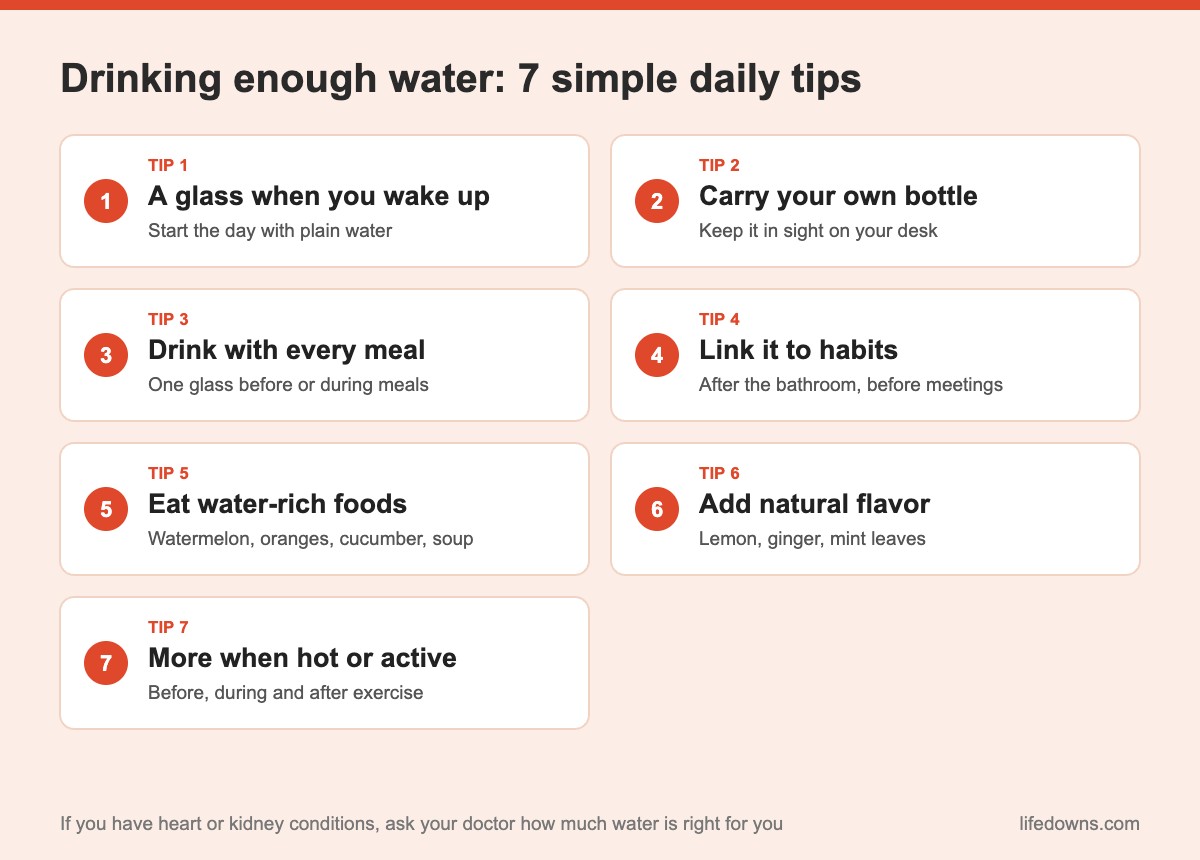
Tip 1: Drink a glass as soon as you wake up
After a long night, your body needs fluid. Keep a glass by your bed or next to your toothbrush and drink it before your morning coffee. It gives your day a clear starting point.
Tip 2: Carry your own water bottle
A 500–750 ml bottle sitting in sight on your desk is the most natural reminder there is. Just aim to finish it and refill it a few times a day.
Tip 3: Have a glass with every meal
Link drinking water to your main meals and snacks. It is easy to remember and helps you eat more slowly and notice when you are full.
Tip 4: Attach it to habits you already have
Take a few sips after every bathroom break, before every meeting or each time you get up to stretch. This kind of habit stacking works much better than trying to remember.
💡 Quick tip: If you keep forgetting, set a couple of phone reminders mid-morning and mid-afternoon for the first week or two until it becomes automatic.
Tip 5: Eat water-rich foods and soups
Watermelon, oranges, grapefruit, cucumber, tomatoes and a bowl of vegetable soup all add meaningful fluid to your day. It is a way of drinking enough water without drinking.
Tip 6: Add natural flavor
If plain water feels boring, add a few slices of lemon, ginger, cucumber or some mint leaves. Limit soft drinks and bubble tea, which are high in sugar, and do not use them as a substitute for water.
Tip 7: Drink more when it is hot or you are active
Have a glass before heading into the sun or starting a workout. During exercise, sip regularly. Afterwards, keep rehydrating. If you sweat heavily for a long time, you may also need to replace electrolytes.
4. Common myths about drinking water
- “You must have exactly 8 glasses”: Eight glasses is just an easy number to remember; real needs vary by person and by day.
- “Only drink when you’re thirsty”: For healthy adults thirst is a reliable signal, but older people often feel thirst less, so they should drink proactively.
- “Chug a lot at once to catch up”: Spreading water through the day is better than drinking a huge amount in a short time.
- “Coffee and tea don’t count”: They still contribute to your fluid intake; plain water should just come first.
5. The bottom line: drinking enough water is a small habit with big benefits
Drinking enough water does not mean counting every glass or buying a fancy bottle. A glass when you wake up, a bottle on your desk, a drink with every meal and a quick look at your urine color will help you take better care of your body every day.
Sample daily water schedule
| When | Suggestion | Reference amount | Notes |
|---|---|---|---|
| On waking | A glass of plain water | ~250 ml | Before morning coffee |
| Morning at work | Sip steadily from your bottle | ~500 ml | Keep the bottle in sight |
| Lunch | A glass of water, a bowl of soup | ~250–400 ml | Soup counts too |
| Afternoon | Refill your bottle | ~500 ml | More on hot days |
| Dinner and evening | A glass of water, some fruit | ~250–400 ml | Cut back close to bedtime |
Note: Amounts are a rough guide for healthy adults and do not replace advice from your doctor.
A few final tips
- Pick a bottle you like: A bottle that is nice and easy to carry makes you want to use it.
- Drink less right before bed: Avoid waking up in the night.
- Look out for older relatives and kids: Remind them to drink, especially on hot days.
- Bring water when you travel: Especially on long trips or outdoor walks.
More from our Health section: Tired eyes from screens: the 20-20-20 rule and Sitting all day? Stand up every 30 minutes.
FAQ about drinking enough water
How much water should I drink per day?
There is no single number for everyone. A commonly cited reference is about 3.7 liters of total water a day for men and 2.7 liters for women, including water from food (around 20%). You need more in hot weather, during exercise or when you have a fever.
How do I know if I am drinking enough water?
Simple signs are that you rarely feel thirsty and your urine is pale yellow and clear. Dark yellow urine, a dry mouth, tiredness or headaches can mean your body needs more fluid.
Do coffee and tea count toward my water intake?
Yes. Coffee, tea, milk and soup all contribute to total fluid. Plain water is still the best choice because it has no sugar or caffeine.
Can you drink too much water?
Healthy kidneys can get rid of extra water, but drinking a very large amount in a short time can cause low blood sodium (hyponatremia). People with heart or kidney conditions should follow their doctor’s advice.
How much water have you had today? Leave a comment and share the trick that reminds you to drink! Save this post and get your family drinking enough water every day too. 💧🥤