
Reading a Food Label in 30 Seconds: Where to Look First
You can read food labels in less time than you think. The front of a cereal box says “high fiber”, “low fat”, “whole grain”. Sounds reassuring. Turn it over and sugar is second on the ingredients list. The front is for selling. If you want to know what is inside, read the back.
You do not need to read everything. Check the four places below, in about 30 seconds.
Table of Contents
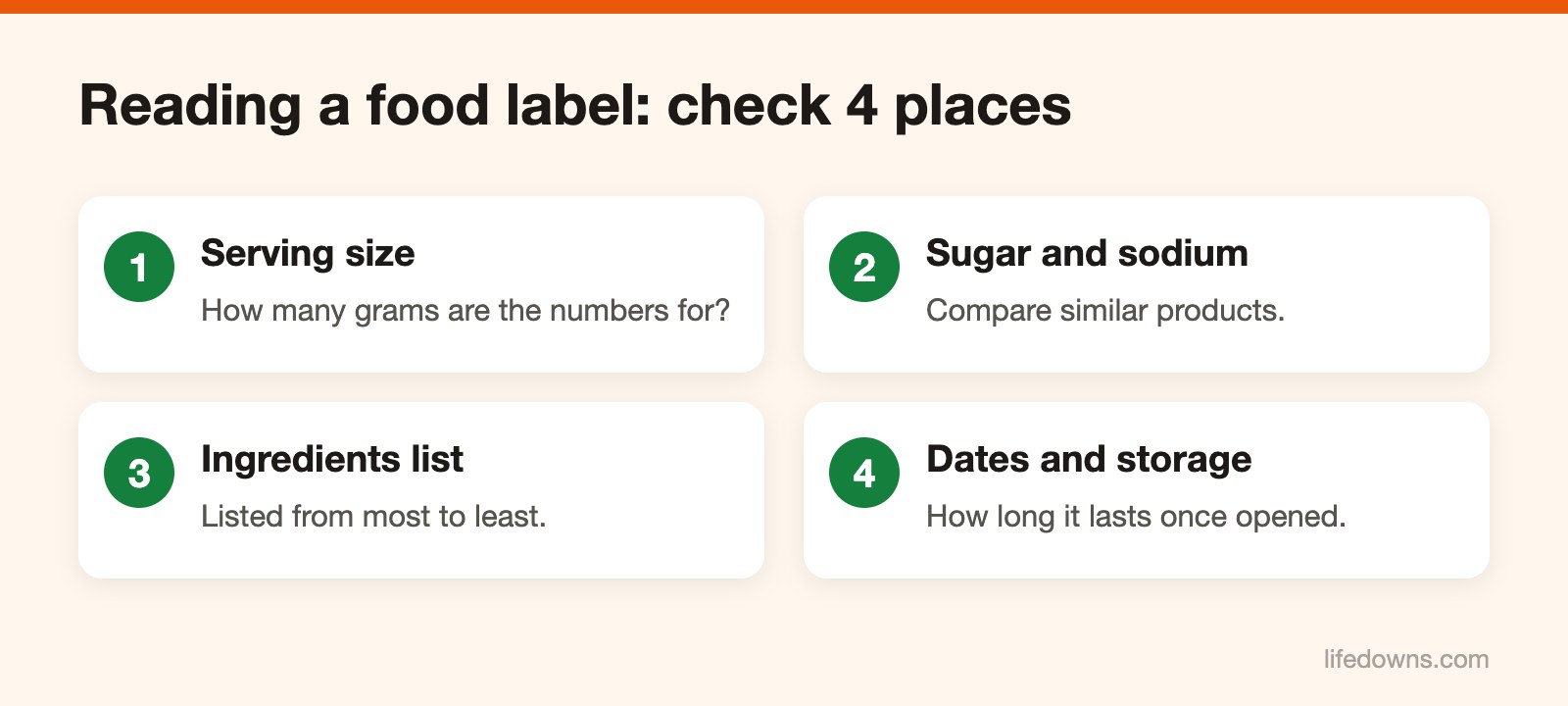
1. Serving size
Nutrition tables are usually per 100 g, or per a serving size the manufacturer chooses. A snack bag might list numbers for 30 g while the whole bag is 90 g. Eat the bag and it is three times the numbers on the label.
When comparing two products, compare the same unit, ideally per 100 g.
2. Sugar and sodium
These two are easy to overdo without noticing. Sugar shows up even in things that do not taste sweet, like sauces and packaged bread. Sodium (salt) is high in instant noodles, sausages, canned food and seasoning mixes.
You do not need to memorize exact limits. At the shelf, pick up two or three products of the same kind, compare, and choose the lower one.
3. The ingredients list
Ingredients are listed by weight, from most to least. If sugar, oil or flour is first, the product is mostly that.
Sugar goes by many names: glucose syrup, corn syrup, invert sugar, malt, honey. A product with three or four of these scattered through the list can have quite a lot of sugar in total, even if none of them is first. After a few trips, you will read food labels without thinking. Once you read food labels regularly, shopping gets faster. Read food labels carefully once; after that, a glance is enough.
4. Dates and storage
Check the expiry date, and read the small line about storage after opening. Many sauces, milks and canned foods say “once opened, refrigerate and use within X days.” The printed date only applies while the package is sealed.
If you have a food allergy, always read the allergen warning. Recipes can change while the front of the package stays the same.
Next time you shop, read food labels on three things you buy often. Learn more about the nutrition facts label, or see our guide to packing lunch for work.